
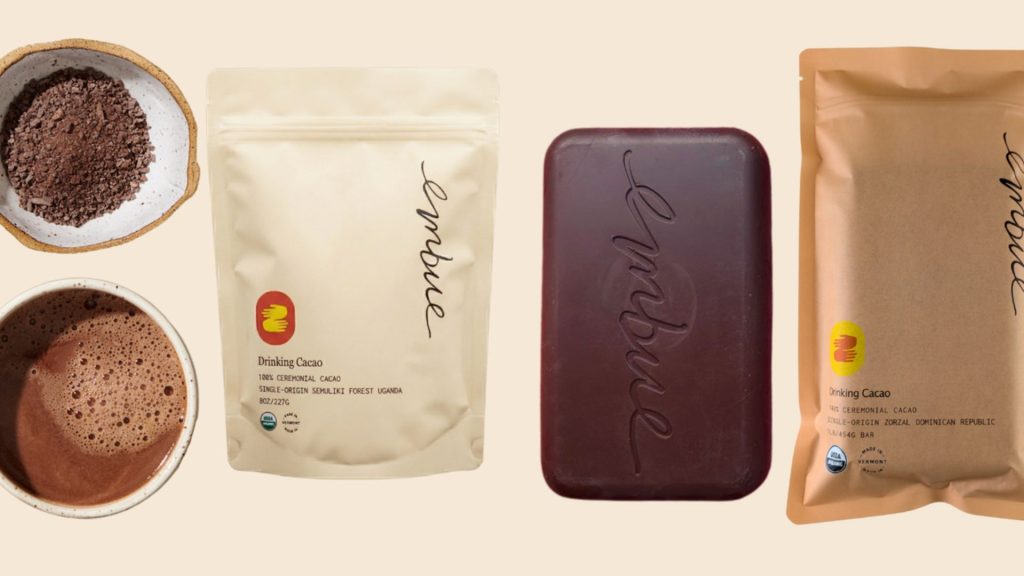
Embue Cacao at face value appears to be a great company. They have a quaint backstory, deeply intertwined spirituality, passionate for cacao, and believe in what they do, for better or for worse. But with a sudden change in sourcing shakes the foundation of their company, and the introduction of AI into their advertising, Embue Cacao is struggling to maintain the principles that got them started. Let’s find out what’s really happening at Embue Cacao.
Who’s Behind Embue Cacao?
The founders are a husband-wife duo, Moses and Ambe, that founded Embue Cacao around 2010. Moses states that his cacao journey began on a trip to Costa Rica in the late 2000s for a spiritual ceremony known as ForestDance. During this event, participants were given cacao brewed as a beverage, presumably the way the locals consume it with spices and usually hot. This “awakening” inspired Moses and Ambe to share their experience back home in Vermont and thus, Embue Cacao, was created. However, they weren’t always called Embue Cacao. In 2010, the company started as “Heartblood Cacao” and had a rebrand in 2021 to Embue Cacao to better reflect how cacao “imbues” into their life.
Erasing Guatemalan Sourcing History
For nearly 15 years, Embue Cacao sourced their cacao from Guatemalan farms in the Laguna Lachuá region, home of the Q’eqchi’ Mayan communities. However, in 2024, they made a Facebook post stating that they were discontinuing their Guatemalan cacao due to climate change affecting supply while demand continued to increase. In other words, they were priced out by larger corporations. What’s unfortunate about this is Embue Cacao, while understandably frustrated, erased all their goodwill on their website about the work they did in Guatemala, though some remnants still remain.
Throughout the years, Embue’s website was propped up with messaging about how closely they worked with Guatemalan farmers, and their contributions to Air Guatemala, as well as 1% For the Planet, which has been all been removed. Embue Cacao even went so far as removing their brand from the 1% For the Planet directory in response.
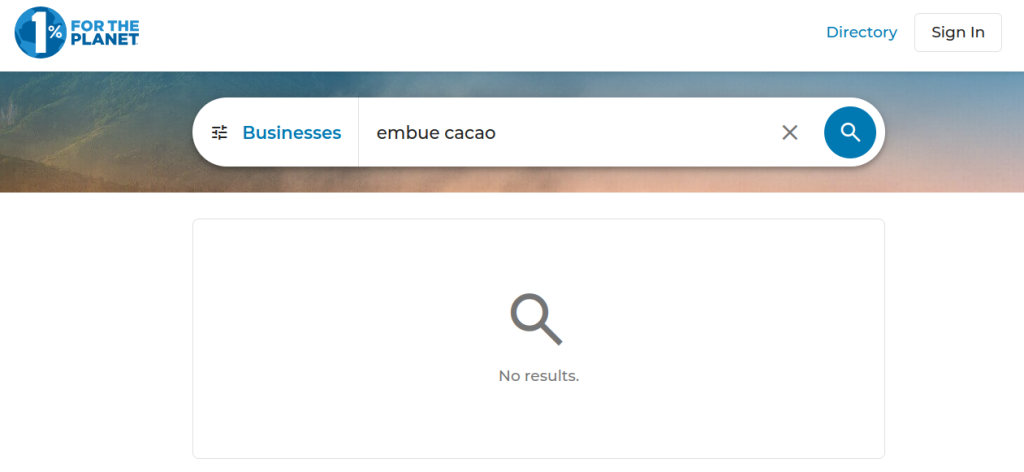
If I had no idea they originally sourced from Guatemala, I’d have not known to search for what happened, and the only evidence was on Facebook. Personally, I believe erasing everything was in poor taste because their contributions to the region were still important and it showed a long history of their social responsibility in Guatemala. Embue Cacao should have left everything up and simply amended it to redirect customers to an updated page about the situation, not a one-off hard to find Facebook post as seen here.
Where Does Embue Cacao Currently Source From?
Embue Cacao sources from two regions, Semuliki Forest, Uganda and Zorzal, Dominican Republic. As expected, the content about each region is sparse because of the recent shift in sourcing, so much of the backstory is missing. What’s left now is a short description of the regions where the cacao comes from and the flavor profile of the cacao.
I apologize for this section being so short, but there’s little to no documentation about their operations in these regions, unlike their history in Guatemala which was robust and transparent. Before the transition, Embue Cacao had an abundance of content about Guatemalan culture, working with the farmers, and physically visiting the estates. None of that applies to the new sourcing. This puts them on the same level as any other brand that simply sources from a broker and just hopes the system is working as intended.
Certifications of Embue Cacao
What hasn’t changed at Embue, as far as I can tell, is they still remain true to their mission of ethical sourcing and remaining certified organic, while dropping Air Guatemala and 1% For the Planet. For example, they are certified organic by the CCOF. However, Embue claims to source “Beyond Fair Trade” as if it were a certification given by its capitalization, when no such thing exists.
Yes — independently certified organic by CCOF and sourced Beyond Fair Trade directly from the farmers who grow it.
The “Ceremonial Grade” Branding
The term “ceremonial cacao” has no real meaning and is a self-ascribed descriptor. But generally, it’s used to mean pure cacao. That’s it. Embue Cacao goes a bit further on the ceremonial side of cacao because they attach spiritual wellness to it, so to their credit much of their branding is treating cacao like a daily morning ritual instead of just a flavorful chocolate beverage. Just understand that there is no difference between a company advertising their cacao as 100% pure and Embue advertising it as ceremonial. Be aware of the possibility you are paying a premium label tax on what’s normally just pure cacao. This goes for all cacao companies, not just Embue Cacao.
Mixing Spirituality With Business
Before I continue, I want to openly disclose my skepticism about sharing another culture’s indigenous traditions. I’m all for traveling and exploring cultures, it’s how we grow as people. Where it gets complicated is when capitalism and AI get involved. Embue Cacao attaches spirituality to cacao after having been to a paid retreat for westerners in South America and experiencing an “awakening”.
Separate from the ceremonial labeling, Embue also sells spirituality as a distinct revenue stream. Moses maintains a private practice called The Heart of Presence, and the company offers paid cacao ceremony training through a program called “Into the Heart.” These courses range into the hundreds of dollars for multi-session experiences centered on personal transformation, inner work, and developing a deeper relationship with cacao as “plant medicine.”
*Update August 2026* Moses has since removed the private practice mention from the website, perhaps after reading this article. Google cache retains the original statement, though.

I don’t doubt Moses’s spirituality, but using it as a crutch to drive business revenue with the help of AI removes a lot of that authenticity. We’re all familiar with the trope of westerners going to indigenous habitats and “borrowing” their traditions to bring back home. See India, Indonesia (mostly Bali), Nepal, China, etc where many westerns go to engage in the local customs just to come home and sell courses. Companies like Embue Cacao are directly competing against those same indigenous communities that are also selling their cacao, so then the question becomes who has the better advertising, and that doesn’t feel so “peace and love” does it?
Heavy Metal Test and Greenwashing
A single product clearing safe harbor levels does not mean the consumer’s total daily exposure is safe. It means that one product, in isolation, contributes an amount the state considers manageable.
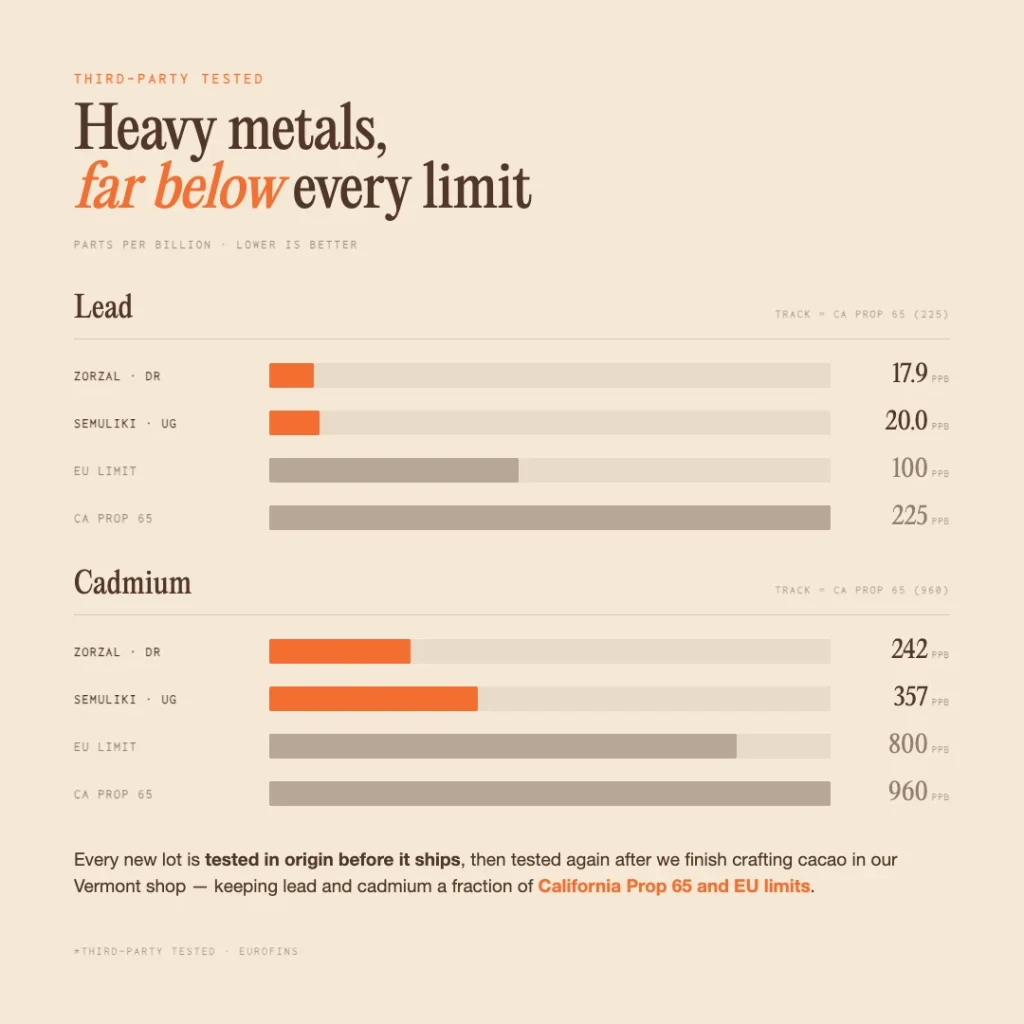
Embue Cacao offers some transparency in their heavy metal tests, but it’s not without its controversies. Let’s start with the good. Embue has a dedicated page that discloses their results in a table for each region, followed by a lengthy opinion piece about regulations.

Now that we got the good out of the way, what follows fills me with grave disappointment. Embue Cacao posts the ‘parts per billion’ of their contamination amounts, but they are mislabeling what it measures against. California’s Prop 65 is NOT 960 ppb, and Embue Cacao is assuming you don’t know that (and you probably don’t).
To grossly oversimplify this so it doesn’t turn into tens of pages, the 960 ppb measurement only applies to companies that participated in a 2018 lawsuit in the California Superior Court. Embue Cacao almost certainly hasn’t opted-in to this lawsuit and the 960 ppb is totally irrelevant even if they did. Yikes.
It’s not the concentration (parts per billion) that matters here, it’s Prop 65’s MADL (maximum allowable daily limit) that matters, which is 4.1mcg of cadmium and 0.5mcg of lead, spread across your entire daily diet, not just a single cacao product.
The greenwashing here is Embue Cacao spends most of the page dismissing Prop 65 as a “lawsuit mill”, instead of questioning why so many products fail the health test in the first place. If so many products are labeled dangerous for your health, why are we blaming the health experts and not the companies constantly contaminating us? Embue Cacao argues that it’s the regulation that’s bad, not the toxicity in the food. That is a morally bad take, especially coming from a company that prides itself on transparency and wellness. It’s a message you expect to hear from conglomerates lobbying for looser regulations, not a family business.
So, what do the numbers actually say that Embue Cacao isn’t disclosing? I can tell you right here via this table below.
| Metal Results | Zorzal Cd (242 ppb) | Semuliki Cd (357 ppb) | Zorzal Pb (17.9 ppb) | Semuliki Pb (20 ppb) |
|---|---|---|---|---|
| 28 g (1 oz) | 6.78 µg = 1.65× MADL | 10.00 µg = 2.44× MADL | 0.50 µg = 1.00× MADL | 0.56 µg = 1.12× MADL |
| 56 g (2 oz, their recipe) | 13.72 µg = 3.35× MADL | 20.24 µg = 4.94× MADL | 1.02 µg = 2.03× MADL | 1.13 µg = 2.27× MADL |
Now you see why Embue Cacao didn’t translate the numbers and spent an entire page downplaying Prop 65. And truth be told, these numbers aren’t even that bad. As far as chocolate goes they are well within the range of contamination you see in most cacao products. I’ve seen companies sitting on significantly worse results. It’s just disappointing seeing a company that prides itself on being pro-consumer write an essay downplaying public health safety.
Additionally, Embue Cacao links to a Eurofins laboratory test for just their Dominican cacao (they link this on their Ugandan page, but it directs to the DR lab results). I’m a bit disappointed that Embue provides a complex lab result without highlighting the key findings. Here’s a quick overview of the relevant results I found:
- Mold and yeast are safe. While this is good, what the test doesn’t measure is the toxin load left behind by fungi. Specifically ochratoxin and aflatoxin, the byproducts of fungi that survive heat while the fungi itself does not. Both are known carcinogens.
- Lead and cadmium are accurate, but the test doesn’t include mercury or arsenic. When the concern is heavy metals, a robust metal panel is preferred. Still, lab results confirm the lead and cadmium which is good.
- No pesticide residue found. Great finding.
- Caffeine measured at nearly 60mg, as much as a cup of coffee. This goes for all cacao, it’s not an Embue specific finding. Pure cacao contains a lot of caffeine, but the theobromine reduces its effects. Pure cacao is not a low caffeine alternative to coffee when consuming the whole bean.
- Saturated fat measures in at 9.39g making up nearly 50% of your daily value per serving. Again, this is a cacao property, nothing to do with Embue Cacao. 80% of the calories in cacao is the fat content.
Overall, the lab test confirms that Embue’s cacao is high quality and contains reasonable amounts of heavy metal that I’d consider safe in moderation. I’d say if not for Embue Cacao’s manifesto against Prop 65 and downplaying the health concerns of contamination, they have great quality cacao that in a vacuum I’d recommend to anyone.
Red Flag: Embue Cacao Uses Generative AI for Content
What I find tragically ironic is how Embue Cacao prides itself on ethical sourcing while simultaneously using AI in their content. Recognizing the negative impact data centers have on the environment and water scarcity, it’s concerning Embue Cacao chooses to use generative AI for content creation. They use AI to summarize their reviews, create images on their website, and create social media videos. See below for examples of AI content.
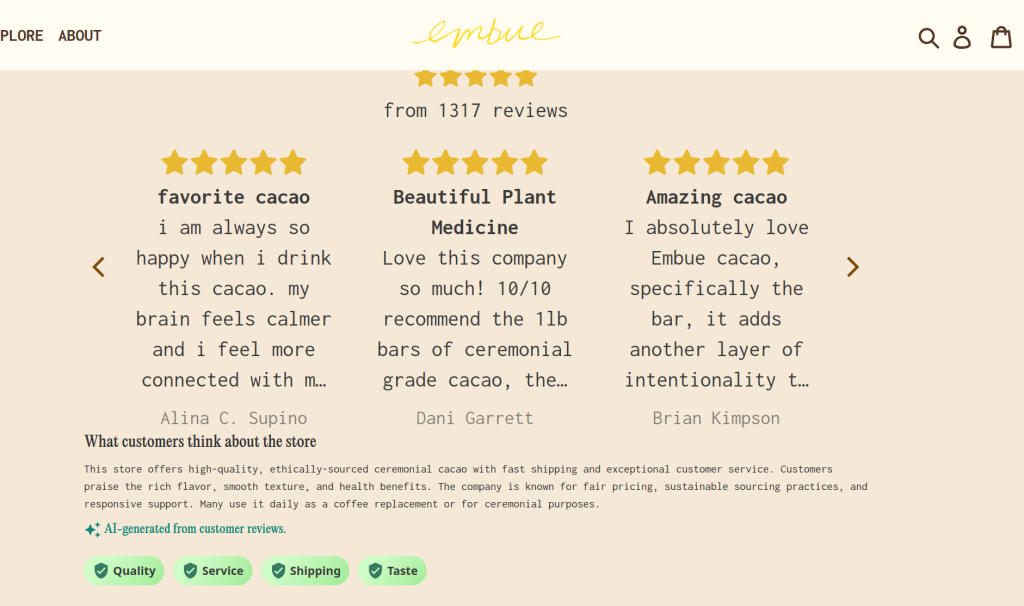
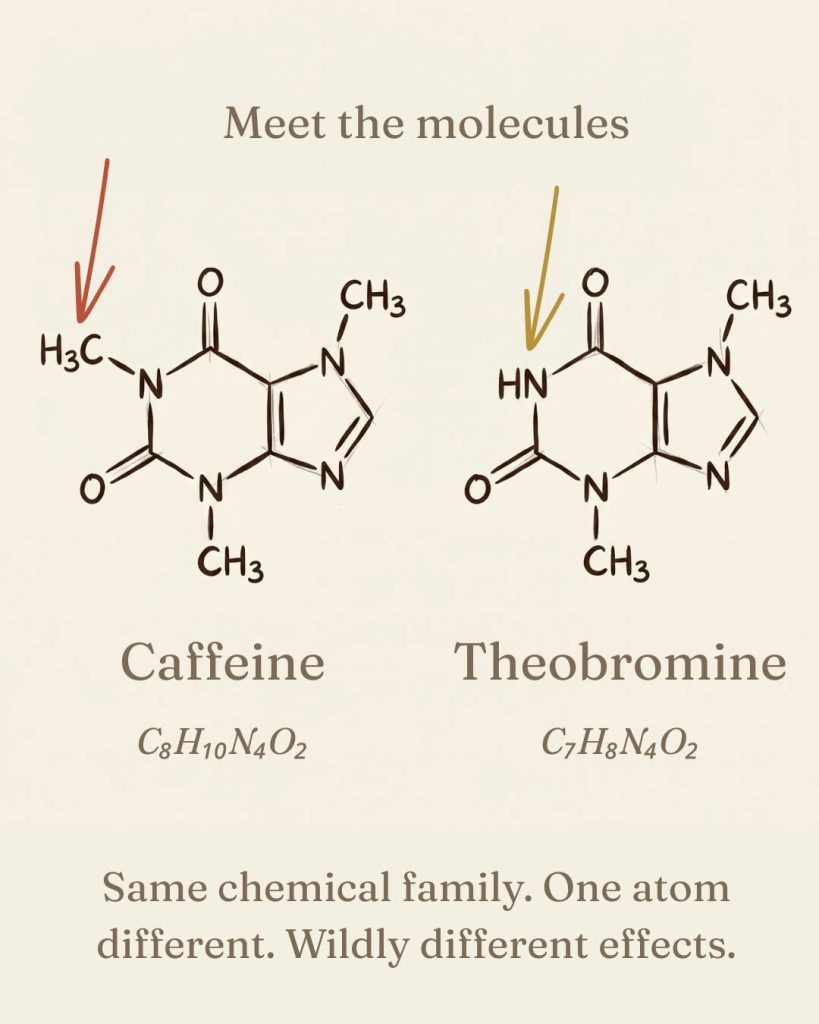
AI is in all of our lives and we all use it to some extent, with or without consent. But when a company consciously chooses to use AI instead of hiring a graphic designer, it not only hurts their credibility and trust, but in my opinion it devalues their messaging. It’s hard to champion for a company using AI at the detriment of the environment while espousing how the cacao is carefully grown in delicate environments.
Conclusion
I have a lot of criticisms about Embue Cacao, certainly. A spiritual wellness company that sells cacao ceremony courses/certifications, strongly downplays science, and uses AI to advertise their business are all significant blemishes in my opinion. Where I think Embue Cacao deserves credit is that I believe their cacao is high quality.
Despite their aggressive science denial and anti-regulation stance, they still disclose their lab results and source from reputable estates. If you can separate the brand from the product, Embue Cacao, for all intents and purposes, is offering a solid product. I wouldn’t outright recommend Embue as your first choice, but I wouldn’t fault you for supporting them either.