
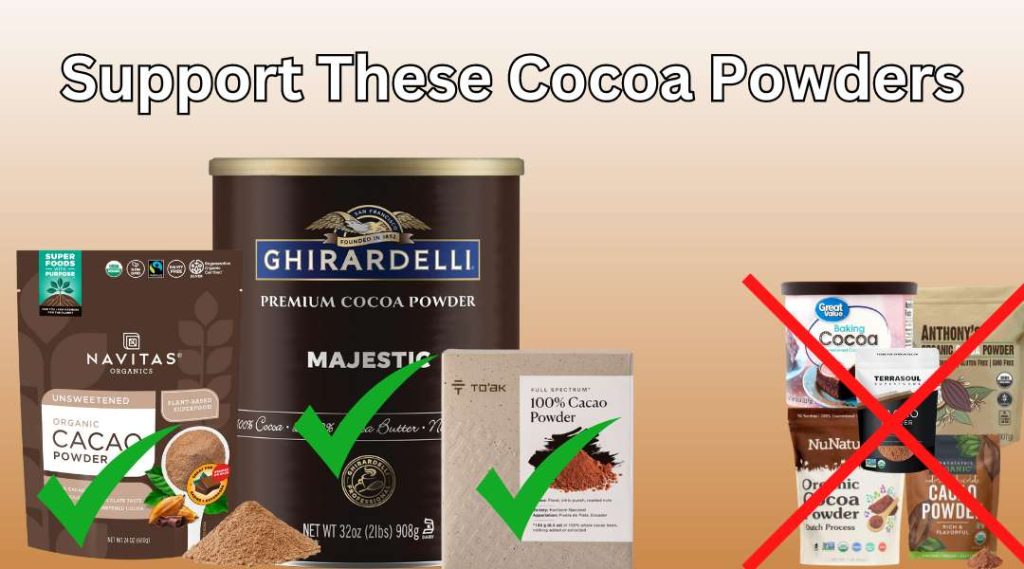
There are a ton of cocoa powders on the market all with varying range of applications and quality. Sometimes they’re called cacao powder, sometimes they’re stone ground, and often times they’ve been alkalized. And everyone ranging from doctors, dietitians, and chocolate experts, all have their own idea of the applicability of these products to your health. You wouldn’t think pulverized cacao beans could be so controversial and complicated, and overshadowed by an industry embroiled in human rights violations, but that’s the reality of the cocoa bean.
And before we finally get into the cocoa powder list, let’s discuss what this list actually aims to accomplish. This list is not about which brand makes the best brownies or costs the least per tablespoon. There’s an infinite number of baking articles that expertly cover that topic. This article is explicitly for people who see those articles, videos, and advertisements, and want to know if the cocoa powder they plan to purchase aligns with their moral and health standards. Some issues that a concerning about the cacao industry are human rights violations, sustainability, quality, ethics, transparency, price, flavor, and more. Most companies make little effort to address any of these, so let’s support the ones that do.
Below is a look at the best cocoa powders to buy in 2026.
Quick links:
- To’ak 100% Full Spectrum Cacao Powder, 6.5oz (Non-Alkalized)
- Guittard Chocolate Company (Alkalized)
- King Arthur Flour Company (Alkalized)
- Ghirardelli Majestic Premium Cocoa Powder (Alkalized)
- Navitas Organics Organic Cacao Powder, 24oz (Non-Alkalized)
- Cacao Barry Extra Brute (Alkalized)
- Valrhona Cocoa Powder (Alkalized)
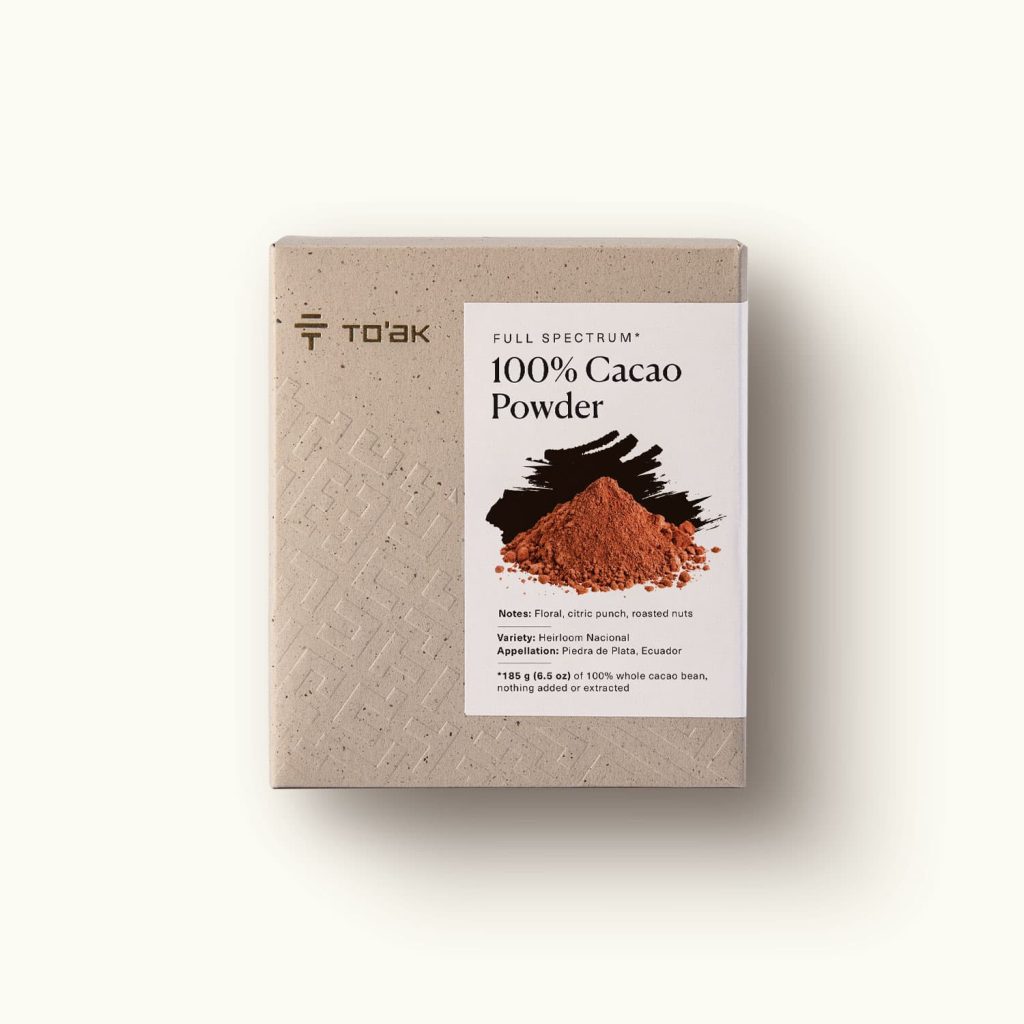
To’ak 100% Full Spectrum Cacao Powder, 6.5oz (Non-Alkalized)
✅ What Works
- Sourced exclusively from rare, DNA-verified pure Heirloom Nacional cacao, one of the most prized and nearly extinct cacao varieties in the world, grown in a single valley (Piedra de Plata) in Ecuador
- Pays farmers up to 700% above the local market price for wet cacao, well beyond what any Fair Trade certification requires. Covers the cost of farmers’ organic and fair-trade certifications themselves [source]
- Certified organic at the source, with a bean-to-bar (tree-to-bar) process completed entirely in Ecuador
- Published a public Transparency Report detailing exactly how much they pay cacao growers, a rare level of financial openness in the chocolate industry
- Independently founded and still founder-led with no private equity acquisition or corporate parent, meaning their mission hasn’t been compromised by outside ownership
⚠️ What to Know
- To’ak is a luxury product, which puts it well outside everyday purchase territory for most consumers
- Their cacao tested for nearly zero traces of lead, but their cadmium levels were about 2mcg. This puts them well below the MADL guidelines and is industry standard for good quality cacao [source]
- They are not Fair Trade certified, despite exceeding Fair Trade pricing. Consumers who specifically prioritize third-party certification labels won’t find one here, though the published transparency data is arguably more substantive than a certification alone [source]
- Some marketing language on their site (e.g., claims about having “the purest cacao you can put in your body”) is self-asserted and not entirely accurate considering their average metal testing result, worth keeping in mind if you’re comparison shopping on purity claims
Bottom line: To’ak is one of the most ethically grounded and transparently operated chocolate brands you’ll find. Their sourcing story is legitimate, their farmer relationships are unusually well-documented, and they carry none of the legal, contamination, or corporate baggage that follows larger brands. The main barrier is price and this is a deliberate luxury purchase, not a pantry staple.
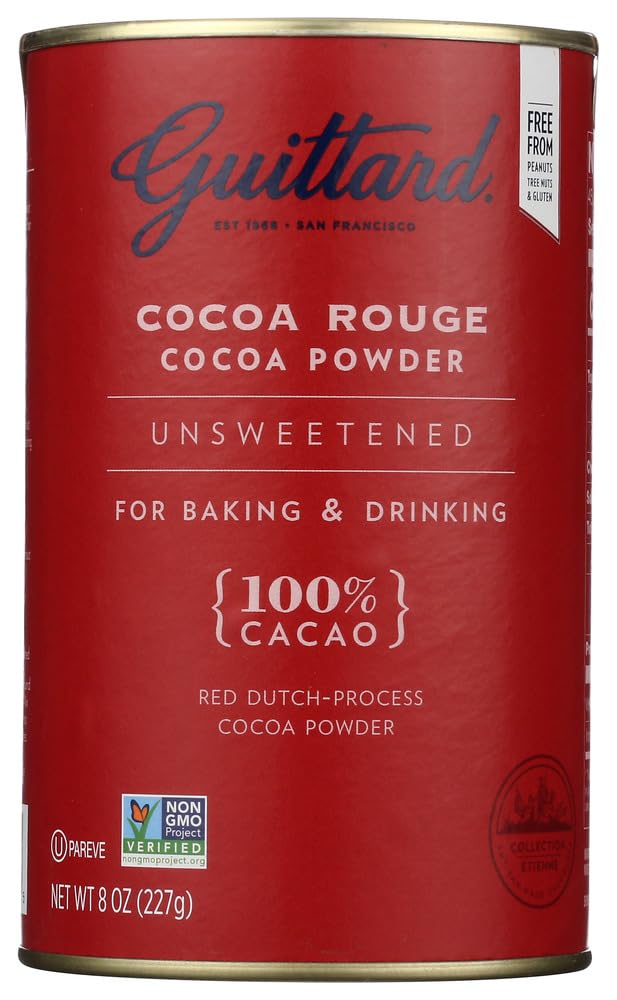
Guittard Chocolate Company Cocoa Rouge (Alkalized)
✅ What works
- America’s oldest continuously family-owned chocolate company. 157 years of independent ownership with no private equity involvement
- Fair Trade Certified since 2004, making Guittard one of the earliest chocolate companies to formalize ethical sourcing commitments
- Founding member of the World Cocoa Foundation; active partner with the International Cocoa Initiative (ICI) running the ECHOES program to combat child labor in West Africa
- Publishes detailed annual Impact Reports with real supply chain specifics, including named farmer cooperative partnerships in Ghana and Ivory Coast.
- SQF (Safe Quality Food) certified manufacturing; SFI-certified sustainable packaging materials
- Third-party testing of finished products has generally shown results below contamination thresholds. No recent independent test has flagged their chocolate as a concern
⚠️ What to know
- Named in an August 2017 Prop 65 Notice of Violation (lead and cadmium) filed by advocacy group As You Sow, however, this was part of a sweeping industry-wide action that named nearly every major chocolate brand simultaneously. Guittard subsequently participated in a settlement that helped establish new industry-wide contamination standards
- No published heavy metal testing data on their own website. Like most chocolate makers, Guittard does not proactively share test results, leaving consumers reliant on third-party testing for reassurance
- Fair Trade and Organic certifications apply selectively across the product lineup, not universally. Some products carry both, others carry neither; check individual product labels
Bottom line: Guittard is one of the most credible independent chocolate companies operating in the US today. Their ethics credentials are deep and predated the current wave of “conscious consumerism” marketing. Fair Trade in 2004, child labor programs in the 2010s, and published impact data years before it became expected. The absence of self-published heavy metal testing is a gap worth watching as transparency norms evolve, but third-party results have consistently come back clean. For a brand operating at the professional and specialty tier, Guittard represents a genuinely trustworthy choice.
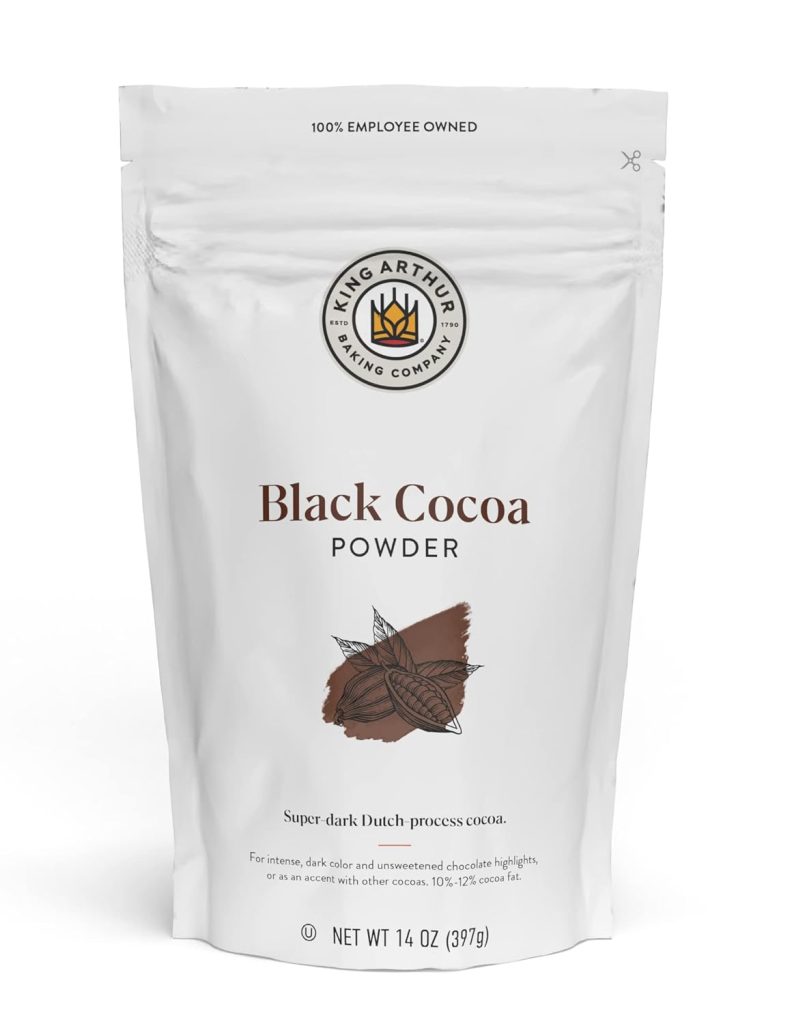
King Arthur Baking Company Black Cocoa Powder (Alkalized)
✅ What works
- Certified B Corp since 2007 with a 97.7 impact score, one of the highest in food manufacturing. Their certification is verified against ESG, labor, and governance standards by B Lab, not self-reported
- 100% employee-owned since 2004, having converted from a family business, meaning profit incentives are structurally aligned with quality and accountability rather than shareholder extraction. They’ve actively advocated for employee ownership models on Capitol Hill as recently as 2025
- Published 2030 sustainability goals requiring 100% of high-risk suppliers to meet a Code of Conduct covering both environmental and social criteria
- Supplier diversity is an explicit target, not a footnote
- Their Dutch-process cocoa (Bensdorp) is sourced from a respected European mill. KAF’s cocoa powder is a professional-grade product sold at an accessible price point, which is a legitimate differentiator in a market full of undisclosed grocery store blends
⚠️ What to know
- KAF does not make their own cocoa, they are a curated retailer of third-party branded products (Bensdorp, Black Cocoa, Triple Cocoa Blend). Their company-level ethics do not automatically extend to cocoa supply chain specifics
- No dedicated cocoa origin transparency, child labor policy, or traceability page exists for their chocolate and cocoa category specifically
- A 2024 third-party test flagged cadmium in their organic bread flour, with a hypothesis linking it to equipment wear in grain processing; their California shop carries active Prop 65 warnings. Neither finding is cocoa-specific, but it raises questions about manufacturing oversight more broadly
Bottom line: King Arthur is a genuinely ethical company with strong structural accountability, but their cocoa story is really a retailer story — they curate rather than source. The B Corp credentials and employee ownership are real differentiators, but readers should understand they’re buying into KAF’s values and curation judgment, not a direct relationship with cocoa farmers or verified supply chain transparency at the ingredient level.
Big Brands
Ghirardelli Majestic Premium Cocoa Powder (Alkalized)
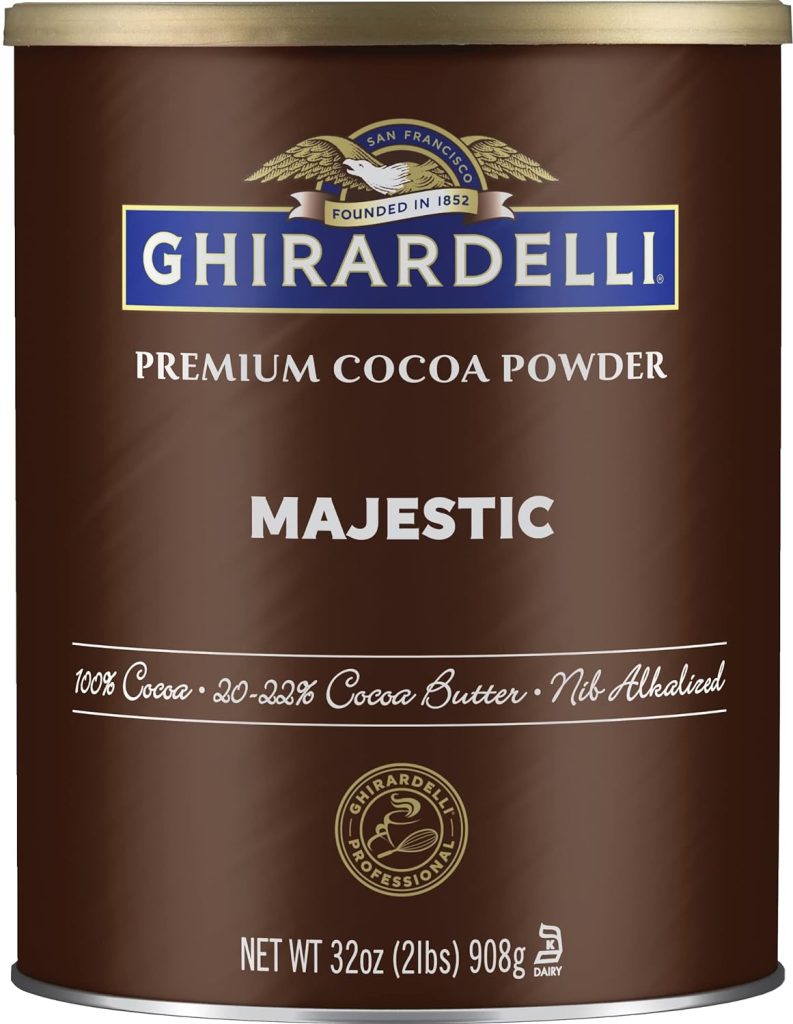
✅What works
- Sourced through Lindt’s in-house Farming Program covering traceability, agroforestry, and community development across growing regions
- Reached 100% cocoa bean sourcing through the Farming Program in 2020, with a stated target of sourcing all cocoa derivatives through sustainability programs by 2025
- Publishes a California Transparency in Supply Chains Act disclosure and a sustainability page on its website, and maintains a Lindt Speak Up whistleblower line
- Founded in 1852, one of America’s oldest continuously operating chocolate manufacturers
- Widely available at mainstream retail, consistent product quality for the price point, and sold in volume formats that make it a practical everyday baking option for cost-conscious consumers
⚠️What to know
- An active Prop 65 notice was filed in 2025 naming Ghirardelli specifically for heavy metal exposure warnings
- No Fair Trade or Rainforest Alliance certification. Lindt runs its own in-house program, which has drawn sustained criticism from advocacy groups and consumer campaigns
- Settled a $5.25M class action over white chocolate baking chips that contained no actual white chocolate or cocoa derivatives, with additional claims that products were falsely labeled “all natural”
- Publicly available heavy metal testing data applies almost entirely to their chocolate bars, not cocoa powder. A meaningful product distinction the company has not addressed transparently, and the one most relevant to baking use cases
- Parent company Lindt & Sprüngli receives a “C” grade from the Good Shopping Guide on environmental reporting, political conduct, and animal welfare
Bottom line: If your priority is finding a low-contamination cocoa powder at a mainstream price point, Ghirardelli is a safe choice based on available data. If you factor in corporate conduct, examples being: labeling fraud, packaging deception, and unverified supply chain ethics, then there are smaller brands doing more to earn your dollar.
Navitas Organics Organic Cacao Powder, 24oz (Non-Alkalized)
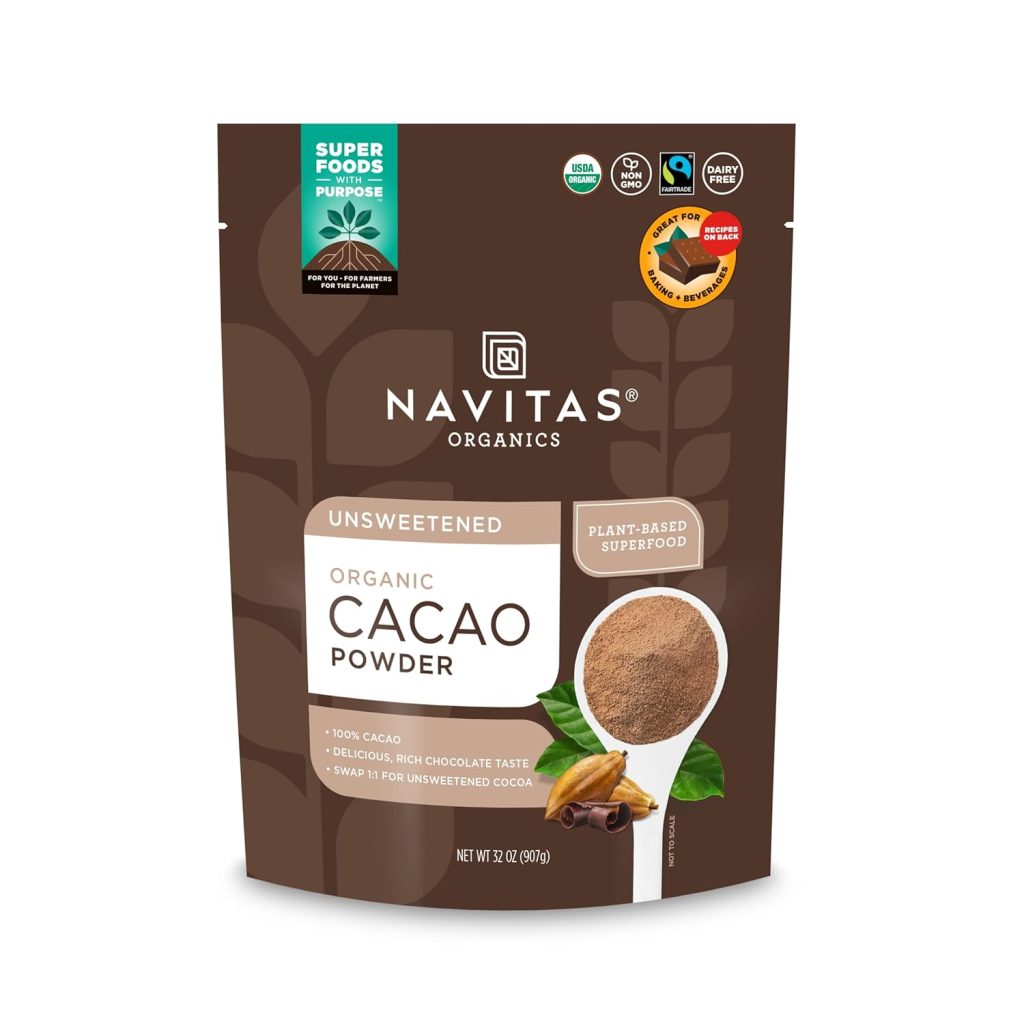
✅ What works
- Cacao powder ranked among the best performers in Consumer Reports’ heavy metals testing — notably cleaner than most competitors tested
- Holds real third-party certifications: USDA Organic, Fairtrade, Regenerative Organic Certified (ROC), and B-Corp
- Unusual for the category: publishes its own heavy metals FAQ with disclosed averages and acknowledges Prop 65 openly
- Nearly two decades of direct sourcing relationships with Peruvian cacao farmers
⚠️ What to know
- A February 2025 Prop 65 notice named four specific products (Maca Powder, Marine Minerals, Greens Blend, Adaptogen Blend) for lead exposure violations
- Voluntarily recalled 8oz Organic Chia Seeds in January 2026 for potential Salmonella contamination; a class action followed alleging failure to disclose the risk
- Fairtrade and ROC certifications apply selectively — not all products in the lineup qualify
- Acquired by Laird Superfood for $38.5M in January 2026, backed by private equity firm Nexus Capital Management — no longer an independent brand
Bottom line: Navitas is one of the more transparent players in the superfood space and their cacao powder holds up well on third-party testing. That said, multiple Prop 65 violations, a recent recall, a pending class action, and a new private equity backed corporate parent are all meaningful flags for a brand whose identity is built on trust and clean ingredients.
Cacao Barry Extra Brute (Alkalized)
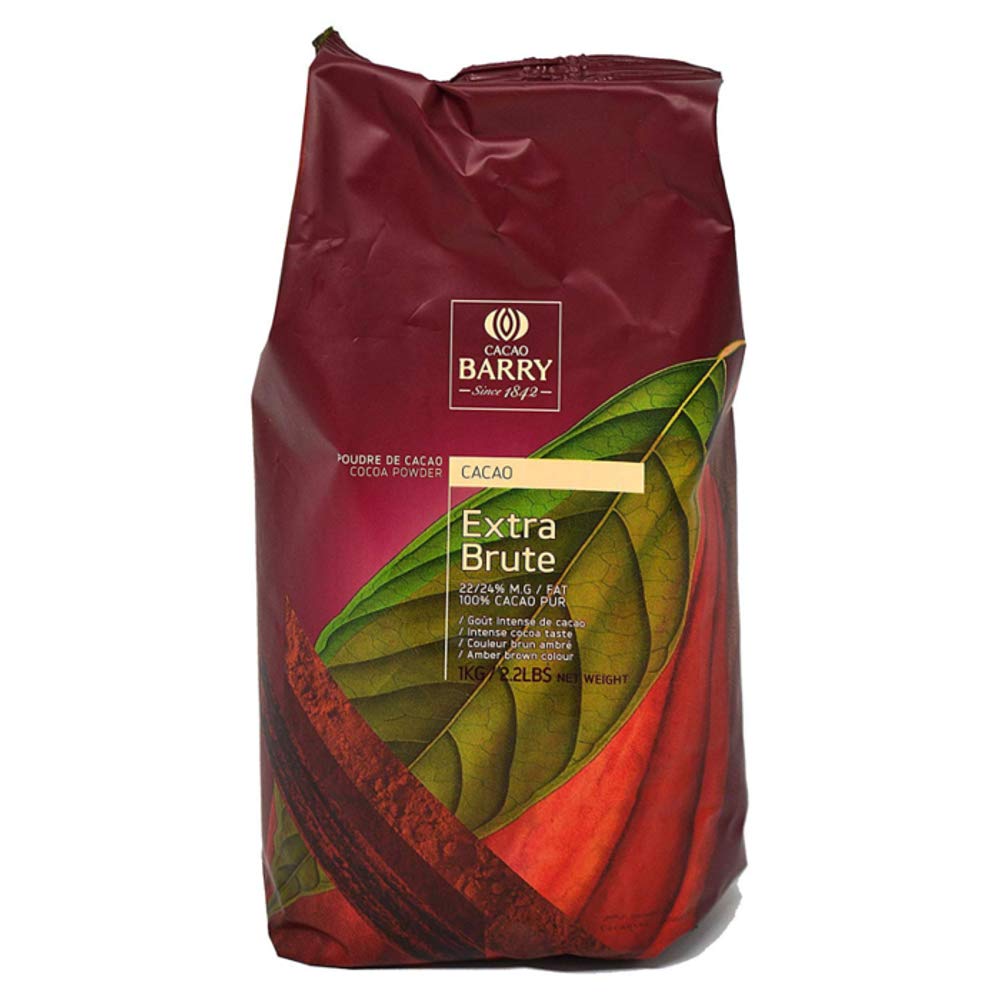
✅ What works
- Sells Fairtrade and Rainforest Alliance certified chocolates. A dedicated product page exists on their site confirming select SKUs carry both certifications
- Maintains a dedicated “eradicate child labor” page with explicit supply chain language and a stated zero-tolerance policy; references the Cocoa Farming Initiative and traceability legislation advocacy
- Cacao powders are confirmed Kosher Pareve and Halal certified per their own product FAQ
- Origin-specific sourcing is well-documented: named cooperatives, regions, and bean varietals appear across their site and brand materials
- Long institutional heritage (founded 1842) with deep chocolate craft infrastructure including the Or Noir custom blending laboratory
⚠️ What to know
- Cacao Barry is not an independent brand. It is a premium label under Barry Callebaut AG, one of the world’s largest industrial cocoa and chocolate manufacturers; the two share supply chains, infrastructure, and ownership
- Fairtrade and Rainforest Alliance certifications apply selectively — only specific SKUs are certified, not the full product range
- Barry Callebaut has reportedly explored splitting its cocoa and chocolate businesses, which could affect Cacao Barry’s positioning and supply chain continuity
Bottom line: Cacao Barry is a technically sophisticated, heritage-rich chocolate brand with genuine origin sourcing and select third-party certifications, but it’s ultimately a premium marketing layer on top of one of the world’s largest industrial cocoa conglomerates. The child labor commitments and traceability claims are the right language, but they’re self-reported and unverified, which matters more here than it would for a smaller independent brand precisely because of the scale and complexity of Barry Callebaut’s West African supply chain.
Valrhona Cocoa Powder (Alkalized)
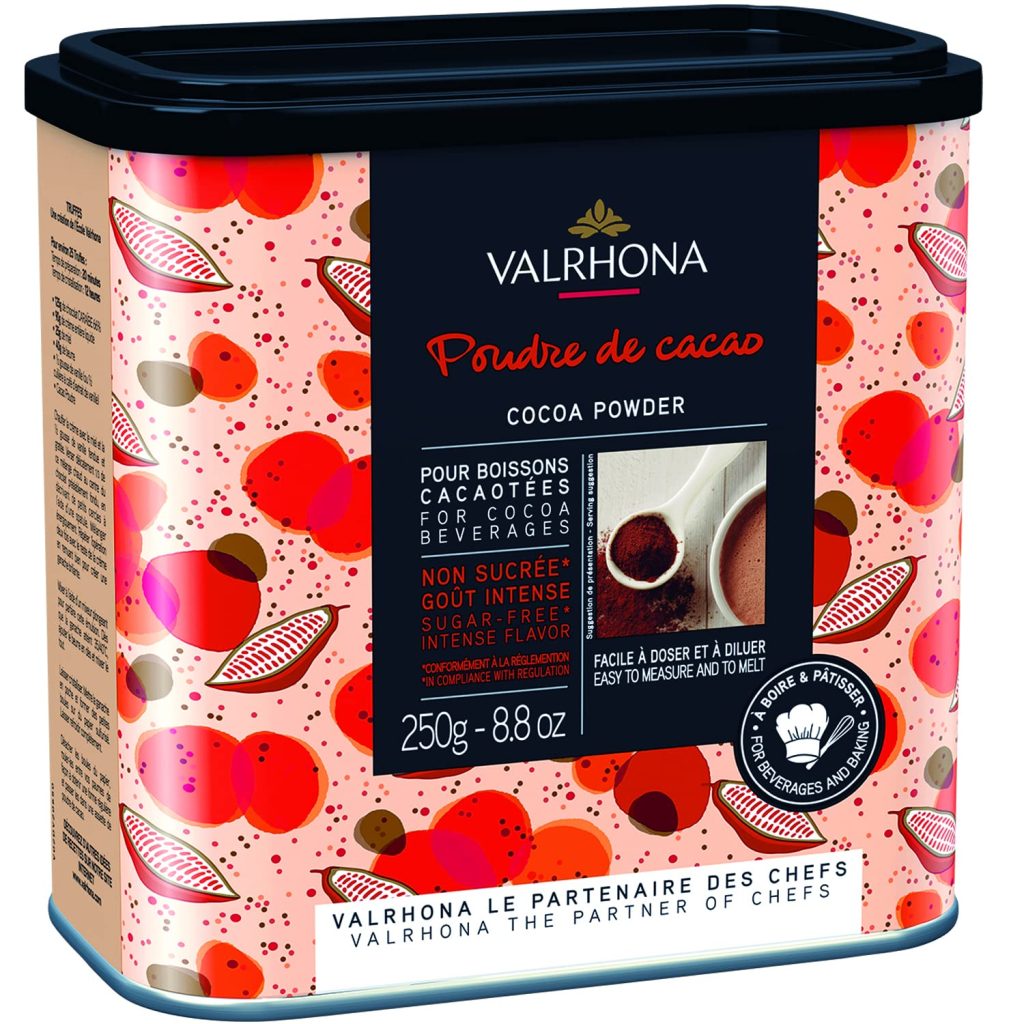
✅What works
- B Corp certified since January 2020, a third-party standard that verifies a company’s social and environmental performance, not just their marketing claims
- Cocoa has been 100% traceable from farm to factory since 2019, with all plots mapped. Carbon impact per kilogram is measured and certified by independent NGO NITIDAE
- Named cooperative partner network across five regions (Central America, Caribbean, South America, Africa, Asia) with publicly published impact reports
- Fairtrade certified cocoa purchasing jumped from 3% in 2023 to 30% in 2025. This a meaningful trajectory that shows the certification commitment is improving
- Cooperative partners like Ecookim/CAPEDIG hold many certifications such as Fairtrade (2010), UTZ (2012), Rainforest Alliance (2014), and Organic (2018), giving Valrhona multiple independent layers of verification
⚠️ What to know
- Valrhona is owned by Savencia Fromage & Dairy (acquired 1984). It is not founder-led or independent, and corporate ownership can shift priorities in favor of shareholder value
- The Abinao 85% bar carried the highest lead levels among “safer choice” brands in Consumer Reports testing, and Kallingo 65% was named in a 2018 California Prop 65 violation notice. Worth monitoring, though independent testers still categorize Valrhona as low-heavy-metal overall
- Only 30% of total cocoa bean purchases are Fairtrade certified as of 2025. The sourcing is improving but the majority of volume is still not under a certified fair-trade standard
Bottom line: Valrhona holds up well as a brand. Their sourcing documentation, cooperative relationships, and B Corp certification give a level of accountability that most cocoa powder brands simply don’t offer. The heavy metal findings are worth knowing, but independent testers still place them in the safer tier. The main caveat is corporate ownership, this is not an independent brand, and that shapes how you weight their long-term commitments.